
PRINCIPI E| RADIUS BY ROBERTO MESSANA
The new modular system for the control of Radiant Architecture systems developed in collaboration with NEWTOHM srl.
Thanks to the logic called BIOSET, the system is managed in the most efficient way possible as it is based on the comfort diagram developed in 1990 and which takes into account the heat exchange of the body both with the wall masses (by radiation) and with the air (by convection and evaporation).
Everything happens according to the right proportions between these three fundamental exchange modes with which we give our metabolic heat to the environment.
In other words: simplicity, efficiency, well-being.
The radiant exchange will be privileged, more physiological and efficient, while the evaporative one will be managed accordingly, without unnecessary waste and without the need to seal the house so as not to nullify the use of the dehumidifier which will thus be more residual and less invasive, which is not possible with controls whose sets are independent.
It is important to know that when the body radiates, thanks to the cool surfaces that surround it, the need to dehumidify is drastically reduced, as is instead necessary with air conditioning.
An experience you do not know. Another life!
BECAUSE RADIATING DOES NOT REQUIRE DRY AIR.
The control system is structured in two versions:
Radius Kontro 8 – up to 8 environments with sensors Sense version (for DIN modules) or BioSense
Radius Kontrol 16 – up to 16 room zones with Sense version probes (for DIN modules) or BioSense.
It is able to manage the entire plant system with remote supervision via APP.
It contains the Messana logic that allows a much higher efficiency of radiant panels and a much more efficient management of dehumidification, among other important advantages.
Beyond the 16 zones or for more complex architectures are available custom versions that are configured on the specific system characteristics.
ARCHITETTURA DEL SISTEMA
SYSTEM COMPONENTS
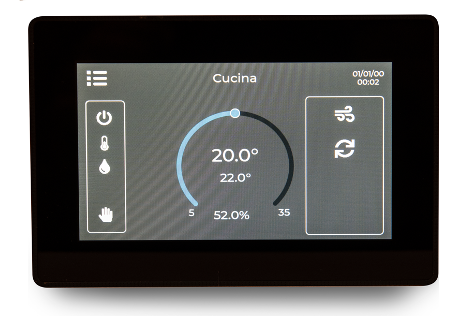
TOUCH DISPLAY PROBE WITH WIFI
The probe is multifunctional as it acts as a TH (Temperature and Humidity) sensor, a 4.3″ touch local interface for all zones, and incorporates Wi-Fi for internet connectivity for remote monitoring. The other probes can be either in the Sense or BioSense version.
MAIN CONTROL MODULE mPID9.DSP
Il modulo controlla e sovrintende a tutte le funzionalità dell’impianto grazie all’insieme di ingressi e uscite e linea bus che permetto il controllo di:
- Sonde ambiente
- Testine elettrotermiche
- Pompe circolazione
- Miscelatrici (fino a 2)
- Temperature fluidi mandata, ritorno, linea deumidificatore, accumulo
- Unità trattamento aria
- Pompa di calore
È dotato di interfaccia per la programmazione e supervisione del sistema, anche tramite connessione con pc. Espandibile tramite i successivi moduli di espansione.
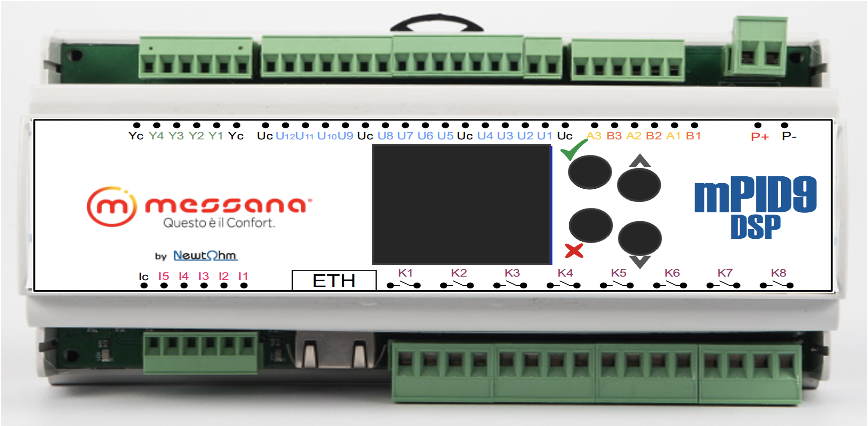
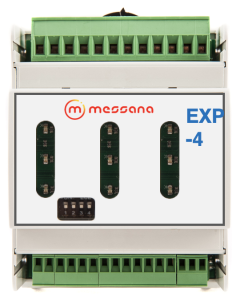
OPTIONAL MANIFOLD EXPANSION: MESSANA E|RADIUS EXPANSION
The module controls and supervises all the system’s functionalities through a set of inputs and outputs and a bus line, enabling the control of:
Environmental probes
Thermoelectric heads
Circulation pumps
Mixing valves (up to 2)
Fluid temperatures for supply, return, dehumidifier line, and storage
Air treatment units
Heat pump
It is equipped with an interface for programming and system supervision, also via PC connection. Expandable through subsequent expansion modules
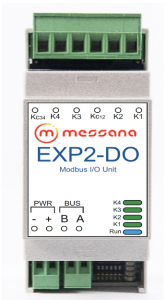
EXPANSION MODULE EXP2-DO
The module extends the digital outputs in both 8 and 16 versions. By duplicating it, it allows the management of third-party air handling units (AHUs) without a Modbus connection.
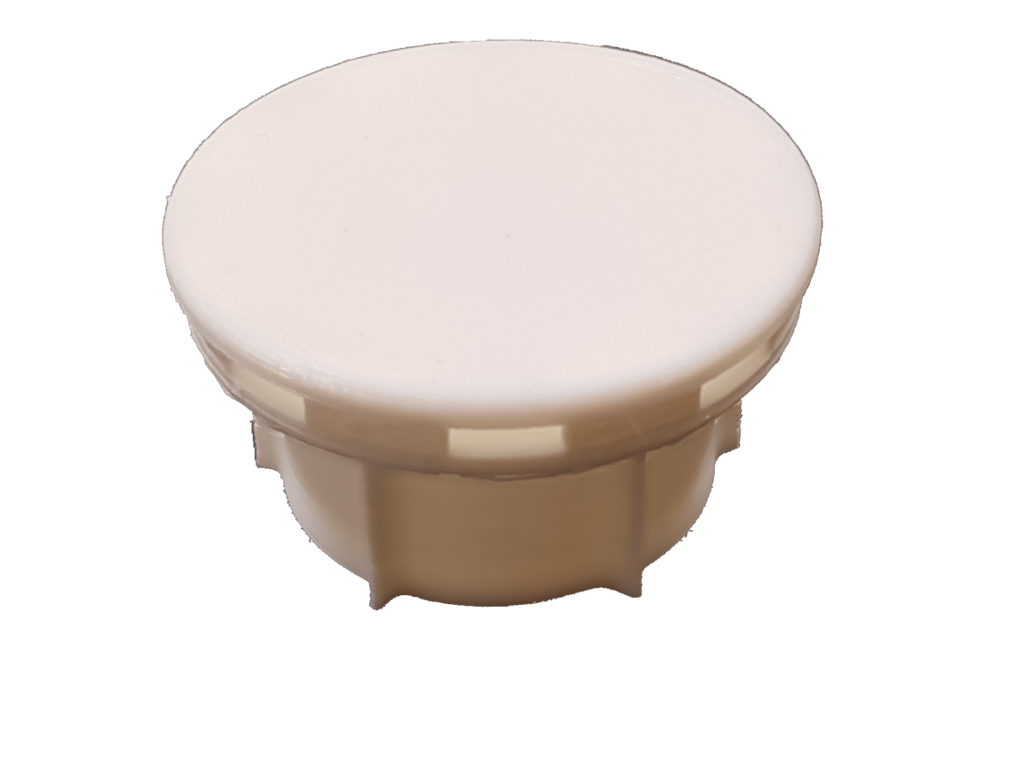
BIOSENSE BLIND TH ROOM PROBES
This version is characterized by its installation versatility (it only requires a 45mm hole) as it can be applied to either a wall or a ceiling, especially in plasterboard (very useful in renovations), ø82 mm and h8mm.
The probe blends in very well on the surface where it is installed, both due to its discreet, thin circular shape and because it must always be painted with the wall paint used. Thanks to its construction features, it detects the operating temperature more than other normal probes on the market and therefore better reflects the radiant exchanges actually perceived by our body.
Also applicable on round electrical boxes ø65.
MICROSENSE BLIND TH ROOM PROBES
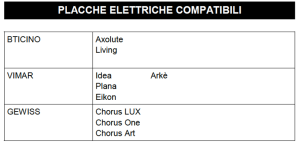
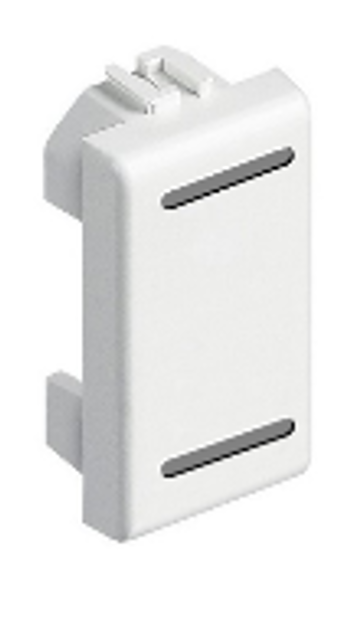
This version can be inserted into the wall-mounted sockets of the main commercial product lines.
NTC WELL PROBE
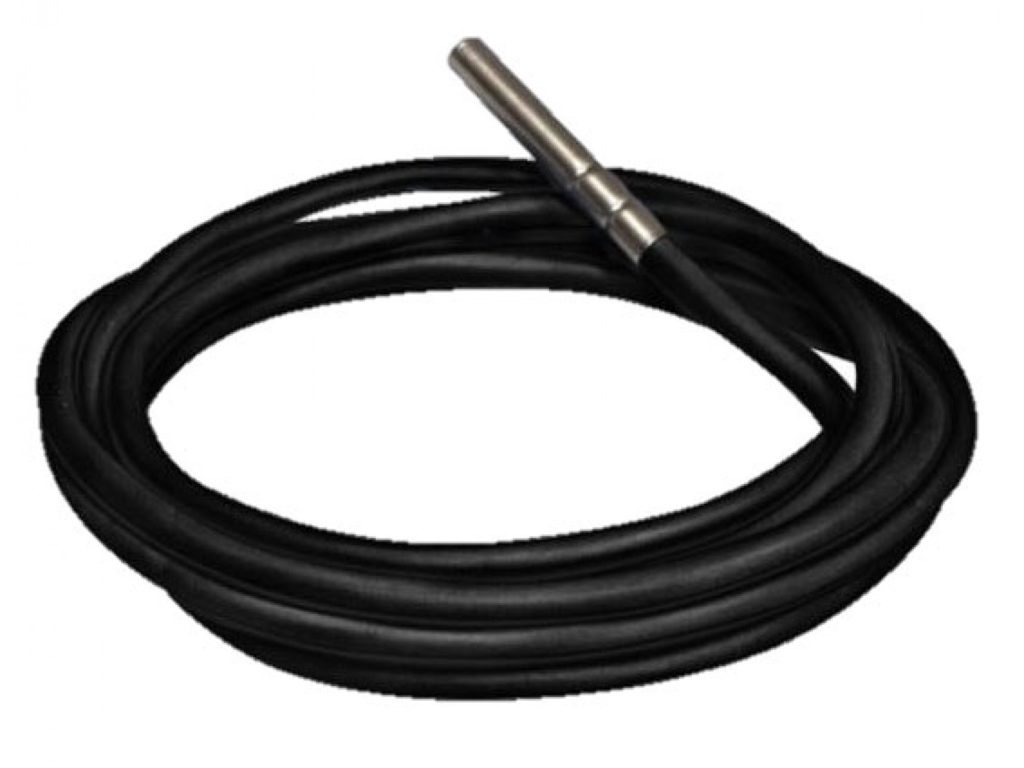
Sonde a pozzetto per misura:
- Temperatura mandata pannelli
- Temperatura ritorno pannelli
- Temperatura mandata deumidificatore
- Temperatura accumulo
Possono essere usate anche a braccetto sul tubo purché sia metallico (rame o acciaio), siano parallele al tubo, ben fascettate e coibentate, e preventivamente ben spalmate di pasta conduttiva.

LOGICA AMBIENTALE O BIO SET
The Messana E|Radius system implements the logics developed by Roberto Messana in such a way as to guarantee very high levels of climate comfort in a completely autonomous manner and without forcing the user to set arbitrary humidity and temperature levels. The main setting parameter of the system is the BIOSET, that is, the combination of temperature and humidity that guarantees the human body an optimal exchange of heat with the surrounding environment.
The BIOSET represents the optimal combination between the radiant temperature and the dew point temperature detected in the environment and correlated according to the Messana comfort diagram which, in the summer, is the following:
CALCULATION OF FLOW TEMPERATURE
The winter flow temperature is with internal compensation: the flow is increased based on the maximum deviation between the current climate conditions and those set.
The summer flow temperature is calculated on the average of the dew temperatures between the active and steady-state zones of the system that do not exceed a settable deviation (see Security function) and corrected with the variable Delta R in such a way as to be able to increase the yield of the panels without having condensation and mold phenomena.
Let’s see the main functions below:
VARIABLE DELTA R (SUMMER)
This function is of great importance to guarantee optimal performance of the panels in cooling and complete protection from condensation phenomena in all conditions.
The surface temperature of the panel, in fact, depends fundamentally on two variables:
the flow temperature
the incident thermal load
At the same flow temperature of the water, in fact, the surface assumes a temperature that is the resultant between the first and the energy that affects the panel. The greater this energy, the greater the temperature difference between the flow and the surface.
The temperature that the surface reaches as a function of these variables is called the equilibrium temperature.
As an example, we report some possible conditions.
Tmand = 12°C Energy = 100 W/m2 Tsup = 18°C
This example refers to stationary conditions, when there is time for the panel to saturate its thermal inertia. In it, we can see that the temperature difference between the flow and the surface is not constant and therefore the safety margin between the two values can normally vary between 0 and 6.
In cooling control, the ΔR parameter serves to partially compensate for the resistance of the material the panel is made of to make it reach a lower surface temperature, thus increasing its cooling power, while maintaining an adequate safety margin.
However, as we have seen, this margin is not constant, so the use of a fixed ΔR does not combine maximum performance with maximum safety. It can be a compromise that penalizes at least one of the two objectives.
In the control system it is possible to know the intensity of the average thermal load of the system thanks to the presence of a return probe in addition to the flow probe. The thermal jump thus calculated represents a direct indicator of the intensity of the incident load.
It is possible to calibrate the variable ΔR calculation algorithm according to the characteristics of homogeneity of the load of the environment by acting on three appropriate parameters. The detected thermal jump represents in fact the average value between all the zones that have in common that power supply for which there is the need to safeguard the operating zones with lower load.
Overall, the variable ΔR allows an improvement in the performance of the system and its safety.
“SECURITY” FUNCTION (SUMMER)
The function consists of a partial or total exclusion of the zone valve(s) of the TH probe that detects a Trug of x°C higher than the average Trug detected between the operating zones and at full capacity. When a zone enters security function it no longer participates in the dew point calculation for flow processing.